
“Can anyone learn to sing?” is one of the most common questions a singing teacher hears. The honest answer is that voices differ, and not everyone will have the same range or sound—but most people can improve their singing significantly.
Singing is not a single mysterious gift. It combines listening, coordination, breathing, muscle memory, language, rhythm and expression. Like other skills, these areas can be understood and developed.
Your starting point is not your limit
Some people match pitch easily from childhood. Others need time to recognise when a note is higher, lower or in tune. That difference may affect the first lesson, but it does not decide what is possible.
A useful teacher listens for what is already working, then chooses the next manageable step. Early exercises might involve copying one note, sliding between two notes or singing a short familiar phrase.
Pitch can be trained
Singing in tune requires the ear, brain and voice to cooperate. If the note misses its target, the solution is not simply to “try harder”. Slower patterns, clearer reference notes and immediate feedback can help build the connection.
Recording brief exercises is useful because the sound you hear while singing is different from the sound outside your head. Listening back helps you develop an accurate sense of your own voice.
Technique makes singing easier
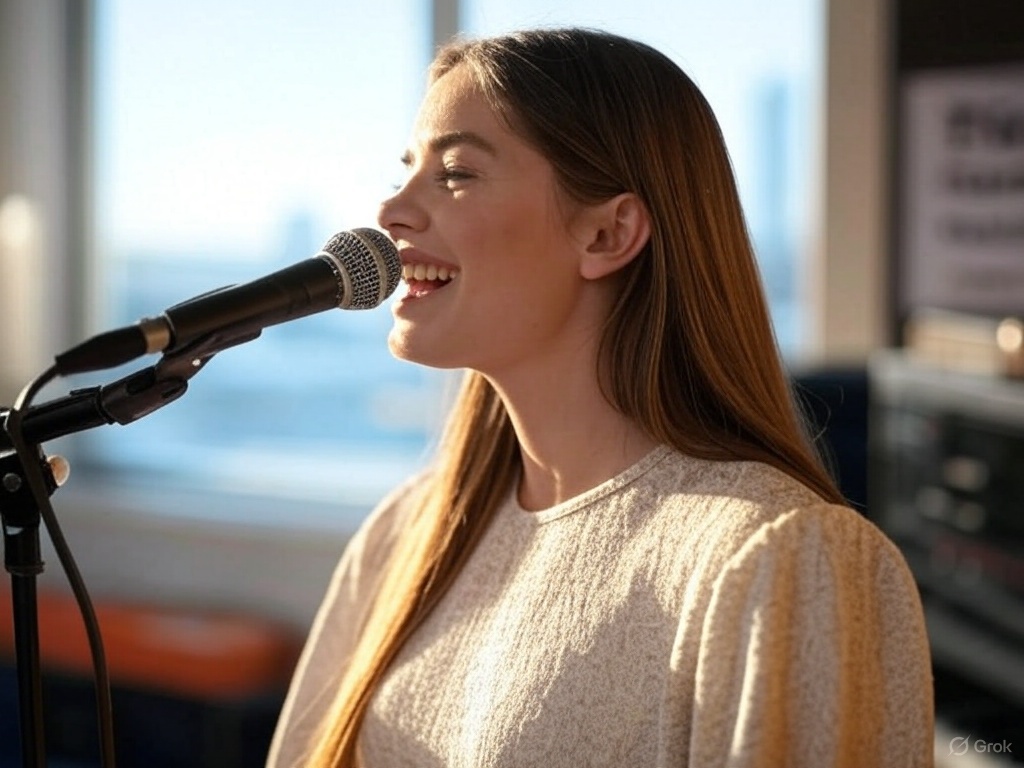
Breath coordination, posture, resonance and vowel shape all influence the sound. Small changes can make a phrase feel easier without increasing volume or force.
A lesson also helps identify when a song is simply in the wrong key. Choosing material that suits your present range allows you to develop technique without unnecessary strain. Read more about choosing the right song for your voice once that guide is published.
Progress is personal
One singer may want to perform publicly, while another wants to sing comfortably at home, join a group or feel less self-conscious. Those are all worthwhile goals.
Progress can include a steadier tone, clearer words, a wider comfortable range, better rhythm or the confidence to finish a song. Comparing your beginning with someone else’s polished performance hides the improvements that matter.
Consistency matters more than marathon practice
Short, attentive practice sessions give the voice repeated chances to learn. Ten or fifteen minutes on a clear task can be more productive than an hour of singing with strain.
If you are completely new, your first singing lesson can establish a comfortable starting point. You do not need to prepare a perfect song or prove that you already belong.
Most importantly, learning to sing should deepen your connection with music. Technique is there to give you more freedom—not to remove the individual character from your voice.
Ready to work on your voice?
Steve offers supportive, practical singing lessons on the Gold Coast, shaped around your voice, experience and goals.